
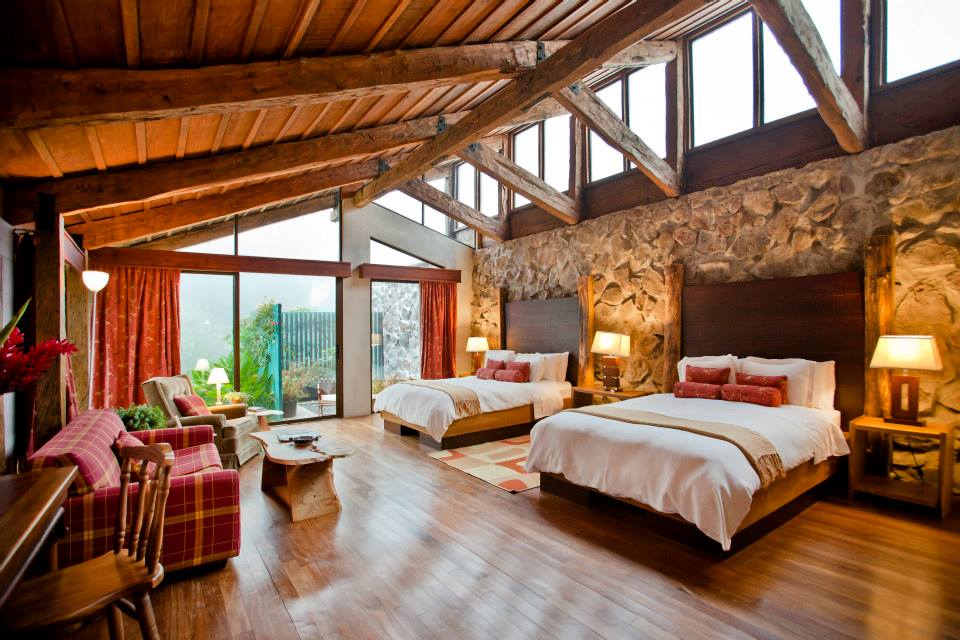
Costa Rica’s boutique lodge segment is full of assets built by people who were excellent at conservation, or hospitality, or both, and who never intended to run a yield business. That gap is the opportunity, and it is unusually legible: in most cases the same two levers are sitting unpulled.
Why the segment rewards scarcity rather than scale
The economics here invert the volume playbook. A lodge of ten to twenty rooms inside its own forest cannot be copied by a competitor down the valley, and the revenue ceiling is set by rate rather than by beds. Rate, in turn, is set by the quality of the experience and by the public score that broadcasts it.
That is why land around a small room count matters more than the room count itself. Hundreds of hectares of private forest wrapped around twelve keys is the single strongest defence of rate and occupancy in this segment, and it is the part a competitor cannot replicate at any price.
Lever one: the calendar
A striking number of these properties open six or seven months a year. The closure is usually inherited rather than decided, a habit formed when the founders wanted a season off, and it is rarely tested against demand.
Extending it is the largest single value lever on most of these assets, and it is a calendar decision before it is a construction one. Nothing needs to be built.
Sequencing matters more than ambition. Year one, stay open and learn, hosting the segments that need no persuasion: birders, researchers, and the domestic weekend market. Year two, build a green season identity rather than discounting into it, because a discounted shoulder season trains the market to wait. Year three, a full calendar with differentiated seasonal positioning. Rushing it burns staff and reviews; sequencing it builds both.
The financial effect compounds in a way that surprises people. Fixed costs are already being carried twelve months a year. Incremental months arrive with an operating leverage that a rate increase cannot match.
Lever two: the rating
In this segment the public score is not a vanity metric, it is the pricing mechanism. The difference between a lodge reviewing in the mid eights and one reviewing in the mid nines is not a slightly better hotel. It is a different rate band, a different guest, and a different set of distribution partners willing to carry you.
What actually moves a score is rarely the thing owners expect. It is not usually the rooms. It is the gap between what a guest was promised and what arrived: the transfer that was vague, the dinner that had one option, the shower that ran cold at altitude, the check in that took forty minutes because one person was doing three jobs. Fixing those is cheap. Rebuilding rooms is not, and moves the number less.
The order is worth stating plainly. Fix the friction first, then the soft product, then the hard product. Owners tend to run it backwards because the hard product is the visible part.
The demand that is already there
Specialist demand is the quiet engine under this segment, and it is countercyclical to the ordinary tourist calendar.
Birdwatching travellers book long, travel in the shoulder seasons, care about guiding rather than thread count, and return. Research groups need field stations and arrive when nobody else does. Education programmes fill weeks that would otherwise be empty. None of these segments respond to discounting, which is precisely why they are valuable: they let you extend the season without teaching the market to wait for a sale.
Guiding itself converts biodiversity into daily revenue at almost no capital cost. The margin lives in knowledge, and the knowledge lives in long tenured local staff, which is one more reason continuity of team belongs in every acquisition plan rather than in the integration plan.
What you will not be able to change
Underwrite the constraints as carefully as the upside.
Conservation land in Costa Rica frequently carries legal restrictions that come with the title. Parcels inside a declared protective zone can be under the forest regime by law rather than by choice, and individual survey plans can restrict use to protection of soils, water, flora and fauna. Article 33 of the Forestry Law 7575 sets protection areas around springs and watercourses where nothing can be built.
If your model depends on adding keys, establish early which parcel they would sit on and what that parcel’s plano actually permits. On many of these properties the honest answer is that the calendar and the rate are the levers, and the building count is not one of them. That is not a problem, but it needs to be in the model rather than discovered in year two.
What to ask for before you bid
Occupancy, average daily rate and RevPAR by month, not by year. Annual figures hide the entire question on a seasonal asset.
A payroll schedule with tenure. In Costa Rica, long service accrues a real severance exposure that settles at closing, and it is better quantified than discovered.
An add-back schedule where the owners have lived on site, which on this asset class is most of them. Household costs mixed into the business are normal and normalising them is routine, but it should happen before diligence rather than during it.
Water concessions, permits, and the capex history. A lodge reviewing well with visible headroom is an engine. A derelict one is deferred capital expenditure wearing a nice photograph.
Frequently asked
Is a six month season a red flag or an opportunity? Almost always an opportunity, provided the closure is a habit rather than a constraint. Weather at altitude is workable. A road that becomes impassable is not. Establish which one you are looking at.
How long does a rating move take? Two to three seasons to move it and hold it, assuming the friction is fixed first. Scores move slowly upward and quickly downward.
Do these assets ever come with clean financials? Rarely, at first. Founder owned lodges usually mix household and business costs. That is a normalisation exercise, not a warning sign, unless the seller resists doing it.
Should the founders stay on? Often, formally and briefly. A defined advisory year transfers guest relationships, staff loyalty and supplier terms that no data room contains.
CHN Hospitality Partners advises operators and investors on hospitality acquisitions in Costa Rica and Central America, on the sell side and in confidence. To talk through a specific repositioning, write to daniel@invest-costarica.com.
